
Reverend John Gloucester, born on America’s birthday, founded the first Black Presbyterian congregation
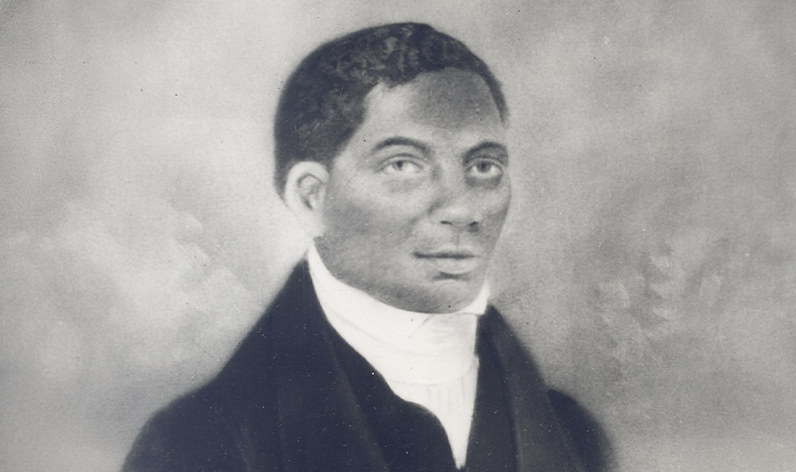
Photo courtesy of the Presbyterian Historical Society.
In Philadelphia, The Board of Pensions of the Presbyterian Church (U.S.A.) stands center stage for the nation’s 250th birthday celebration. But the agency is marking another 1776 birth that holds special meaning for Black Presbyterians, especially in this city of firsts.
The same year the Declaration of Independence was signed, the Reverend John Gloucester was born into slavery in Tennessee. Gloucester would become the first African American ordained as a Presbyterian minister in the U.S. and establish the nation’s first Black Presbyterian congregation in the city of the signing.
New River Presbyterian Church in West Philadelphia traces its beginnings to Gloucester. New River is a union of three historic congregations — one being First African Presbyterian Church, the congregation Gloucester founded in 1807. The spiritual heritage of First African animates New River’s commitment to seeing its community in the city flourish.
The Board of Pensions renamed its second-floor conference space for Gloucester in 2022, after a formal proposal to honor him was received by the agency’s staff-led Diversity, Equity, and Inclusion Leadership Council.
After being manumitted by the Presbyterian missionary Gideon Blackburn in 1806, Gloucester studied at Greeneville College, now PC(USA)-affiliated Tusculum University. In 1807, at age 33, he moved to Philadelphia and began preaching in a house in South Philadelphia. At the time, the city’s free Black population was nearly 9,000, a vibrant, established community anchored by independent Black churches.
When Gloucester’s congregation grew too big for the house, he moved it several blocks away to a street corner, where his singing would draw a crowd and he’d begin preaching. First African was eventually built on the corner and dedicated in 1811. Gloucester preached there until his death in 1822. The congregation moved several more times before moving in 1957 to what is now New River.
As Gloucester built a congregation, he was also raising money to free his wife and five children, who were still enslaved in Tennessee. It was at least three years after his arrival before they could join him in Philadelphia. All four Gloucester sons became ministers, including three who pastored in Philadelphia.
Over 200 years after Gloucester was born, his ministry is alive and well in the city where he began building his legacy in freedom.